Tamil Calendar 2027 January
Welcome All! The Tamil Calendar 2027 January (தமிழ் நாட்காட்டி 2027 ஜனவரி) PDF can be downloaded here.
Tamil Calendar 2027 January: Are you looking for a (தமிழ் காலண்டர் 2027 ஜனவரி) Tamil Calendar for January 2027? Great! We provide the January calendar along with a complete list of Tamil festivals, vrats and holidays. This article also explains how Tamil families observe important days at home. A January 2027 Tamil calendar image is included, and you can also download the Tamil January PDF. Below is a link to the Tamil Almanac calendar PDF.
Tamil Calendar 2027 January
Here is Tamil Calendar 2027 January Image you can check and read all Tamil Calendar 2027 january Muhurtham Dates.
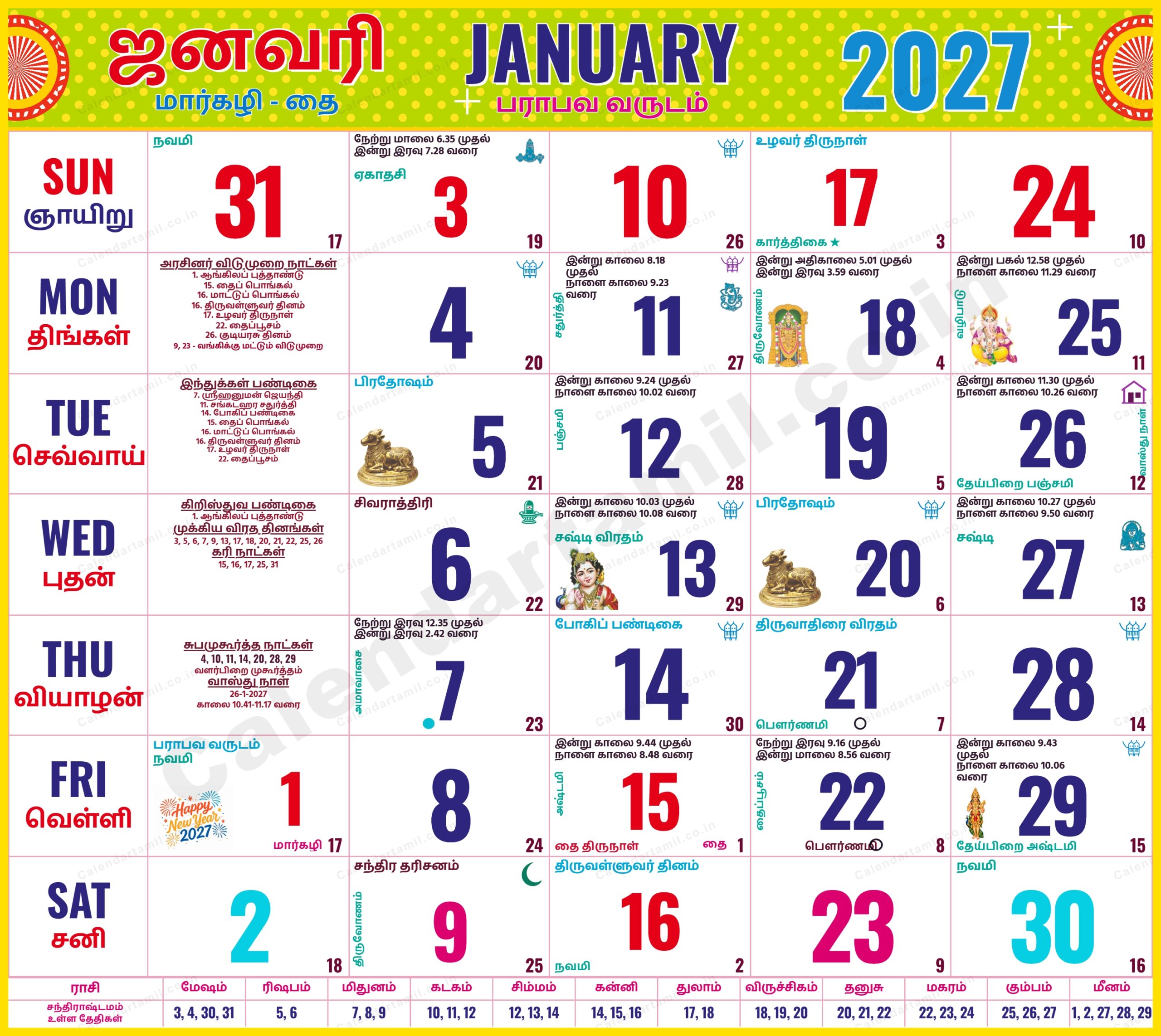
Tamil Calendar Festivals (Muhurtam Dates) in January 2027
| Date | Day | Festival / Event |
|---|---|---|
| 01 January 2027 | Friday | New Year’s Day / ஆங்கிலப் புத்தாண்டு |
| 02 January 2027 | Saturday | No major listed event; check local Tamil Panchangam |
| 03 January 2027 | Sunday | Saphala Ekadashi / சபலா ஏகாதசி |
| 04 January 2027 | Monday | Ekadashi Parana; check local Panchangam for timing / ஏகாதசி பாரணை |
| 05 January 2027 | Tuesday | Pradosham / பிரதோஷம் |
| 06 January 2027 | Wednesday | Masa Shivaratri / மாத சிவராத்திரி |
| 07 January 2027 | Thursday | Amavasai / அமாவாசை |
| 07 January 2027 | Thursday | Hanumath Jayanthi / அனுமன் ஜெயந்தி |
| 08 January 2027 | Friday | No major listed event; check local Tamil Panchangam |
| 09 January 2027 | Saturday | Chandra Darshan / சந்திர தரிசனம் |
| 10 January 2027 | Sunday | Thiruvonam / திருவோணம் |
| 11 January 2027 | Monday | No major listed event; check local Tamil Panchangam |
| 12 January 2027 | Tuesday | Vinayaka Chaturthi / விநாயக சதுர்த்தி |
| 13 January 2027 | Wednesday | Sashti; check local Tamil Panchangam / சஷ்டி |
| 14 January 2027 | Thursday | Bhogi Pandigai / போகிப் பண்டிகை |
| 14 January 2027 | Thursday | Last day of Margazhi / மார்கழி மாத நிறைவு |
| 15 January 2027 | Friday | Thai Pongal and Makara Sankranti / தைப்பொங்கல் மற்றும் மகர சங்கராந்தி |
| 15 January 2027 | Friday | Thai month begins / தை மாதம் தொடக்கம் |
| 16 January 2027 | Saturday | Mattu Pongal / மாட்டுப் பொங்கல் |
| 16 January 2027 | Saturday | Thiruvalluvar Day / திருவள்ளுவர் தினம் |
| 17 January 2027 | Sunday | Kaanum Pongal and Uzhavar Thirunal / காணும் பொங்கல் மற்றும் உழவர் திருநாள் |
| 17 January 2027 | Sunday | Karthigai Vratam / கிருத்திகை விரதம் |
| 18 January 2027 | Monday | No major listed event; check local Tamil Panchangam |
| 19 January 2027 | Tuesday | Pausha Putrada Ekadashi / பௌஷ புத்திரதா ஏகாதசி |
| 20 January 2027 | Wednesday | Pradosham / பிரதோஷம் |
| 21 January 2027 | Thursday | No major listed event; check local Tamil Panchangam |
| 22 January 2027 | Friday | Thai Poosam / தைப்பூசம் |
| 22 January 2027 | Friday | Pournami / பௌர்ணமி |
| 23 January 2027 | Saturday | No major listed event; check local Tamil Panchangam |
| 24 January 2027 | Sunday | No major listed event; check local Tamil Panchangam |
| 25 January 2027 | Monday | Sankatahara Chaturthi / சங்கடஹர சதுர்த்தி |
| 26 January 2027 | Tuesday | Republic Day / குடியரசு தினம் |
| 27 January 2027 | Wednesday | Sashti; check local Tamil Panchangam / சஷ்டி |
| 28 January 2027 | Thursday | No major listed event; check local Tamil Panchangam |
| 29 January 2027 | Friday | Kalashtami / காலாஷ்டமி |
| 30 January 2027 | Saturday | Martyrs’ Day / தியாகிகள் தினம் |
| 31 January 2027 | Sunday | No major listed event; check local Tamil Panchangam |
Festival dates may depend on the applicable tithi, local sunrise, sunset, moonrise or nakshatram. Chennai and another Tamil Nadu city can occasionally have different puja or vrat-completion timings. Confirm the exact details in a Chennai-based printed Tamil Panchangam or your family’s regional Panchangam.
How Tamil Families Celebrate the Festivals of January
Hanumath Jayanthi
Hanumath Jayanthi is observed on Margazhi Amavasai in many Tamil traditions. Devotees pray to Anjaneyar for courage, discipline and devotion, and temples may arrange special abhishekam and alankaram.
Some devotees keep a fruit or milk vratam until the puja is complete. Simple sattvic food is preferred, while meat, alcohol, onion, garlic and stale preparations are traditionally avoided.
- Bathe early and draw a small kolam (கோலம்) near the puja place.
- Light a vilakku (விளக்கு) before an image of Anjaneyar.
- Offer betel leaves, flowers, fruit and butter where customary.
- Recite Hanuman Chalisa, Anjaneya Gayatri or Sundara Kandam.
- Perform arati and distribute prasadam (பிரசாதம்).
Puja samagri: Anjaneyar image, lamp, flowers, betel leaves, fruit, butter and sattvic naivedyam.
Vadai malai is a familiar temple offering, though it need not be prepared in every home. Families may offer a small bowl of sweet pongal, aval or fruit. The prayer is usually simple, with the sound of Anjaneyar namam filling the house.
Bhogi and Thai Pongal
Bhogi marks the final day of Margazhi, while Thai Pongal welcomes the first day of Thai. It is a harvest thanksgiving festival dedicated to Surya and to the natural forces that support farming and family life.
Pongal is not generally observed as a strict fast. Families prepare fresh vegetarian food and avoid stale dishes. The festival meal is cooked only after the morning cleaning, kolam and Surya worship are completed.
- Clean the home and draw a fresh kolam at the entrance.
- Decorate the Pongal pot with turmeric leaves.
- Cook newly harvested rice with milk until it boils over.
- Call out “Pongalo Pongal” and offer the first portion to Surya.
- Perform arati and share the meal with everyone at home.
Puja samagri: Pongal pot, new rice, milk, jaggery, turmeric plant, sugarcane, banana, flowers and lamp.
Sakkarai pongal and ven pongal are prepared along with aviyal, sambar, poriyal and vadai according to family practice. Sugarcane rests near the doorway, turmeric leaves decorate the pot, and children eagerly wait for the sweet Pongal to be served.
Mattu Pongal and Kaanum Pongal
Mattu Pongal honours cattle for their place in farming and rural life. Kaanum Pongal is more relaxed, with families visiting relatives, spending time outdoors and seeking blessings from elders.
These are not fasting days. Fresh vegetarian food is prepared, and any ritual involving cattle should be gentle and safe. Families without cattle may simply offer thanks for food, farming and the people who work on the land.
- Clean the puja area and light a lamp.
- Offer flowers, turmeric and kumkum according to family practice.
- Place a small portion of Pongal, fruit and sugarcane as naivedyam.
- Pray for farmers, cattle and a good harvest.
- Share the food and seek blessings from elders.
Puja samagri: Lamp, flowers, turmeric, kumkum, Pongal, banana, coconut and sugarcane.
In villages, cattle may be washed and decorated carefully with flowers. In city homes, the day is observed through gratitude, family visits and a shared meal. Kaanum Pongal often feels like a gentle family holiday after the busy Pongal morning.
Thai Poosam
Thai Poosam is dedicated to Lord Murugan and is observed when Poosam nakshatram falls in the Tamil month of Thai. Murugan temples conduct abhishekam, archana (அர்ச்சனை) and special processions according to local tradition.
Some devotees take only fruit, milk or one sattvic meal. Meat, alcohol, onion, garlic and heavy food are avoided by those keeping a vratam. Kavadi and other demanding vows should be undertaken only with proper guidance and preparation.
- Bathe early and clean the puja place.
- Light a lamp before an image of Lord Murugan.
- Offer flowers, fruit, milk and sandal paste.
- Chant “Om Saravanabhava” or recite Kanda Sashti Kavasam.
- Perform arati and distribute the offered prasadam.
Puja samagri: Murugan image, lamp, flowers, milk, fruit, sandal paste, vibhuti and naivedyam.
Paal payasam, panakam or a simple fruit offering may be prepared at home. Many families prefer visiting a Murugan temple, where the sound of bells, chanting and “Vel Vel Muruga” gives the day its familiar devotional mood.
Sankatahara Chaturthi
Sankatahara Chaturthi is dedicated to Lord Vinayagar. Devotees fast during the day and complete the observance after moonrise, Chandra Darshan and Vinayagar puja.
Those keeping the vratam avoid regular grain meals until the worship is completed. Fruit, milk and light sattvic food may be taken when required. The Chennai moonrise time should be verified before beginning the evening puja.
- Clean the puja place and light a lamp.
- Offer arugampul, flowers and fruit to Vinayagar.
- Prepare kozhukattai or another simple naivedyam.
- Recite Vinayagar Agaval or a short Ganesha mantra.
- Observe the Moon, offer prayer and complete the vratam.
Puja samagri: Vinayagar image, arugampul, flowers, lamp, coconut, fruit and kozhukattai.
A few freshly steamed kozhukattai make a homely offering. Some households prepare sundal instead, while others keep the naivedyam to coconut and banana. The vratam ends quietly after the family completes the evening prayer.
PDF Tamil Calendar January 2027
Here is the Tamil Calendar January 2027 Image and PDF. You can check, read, and also click to Download PDF